
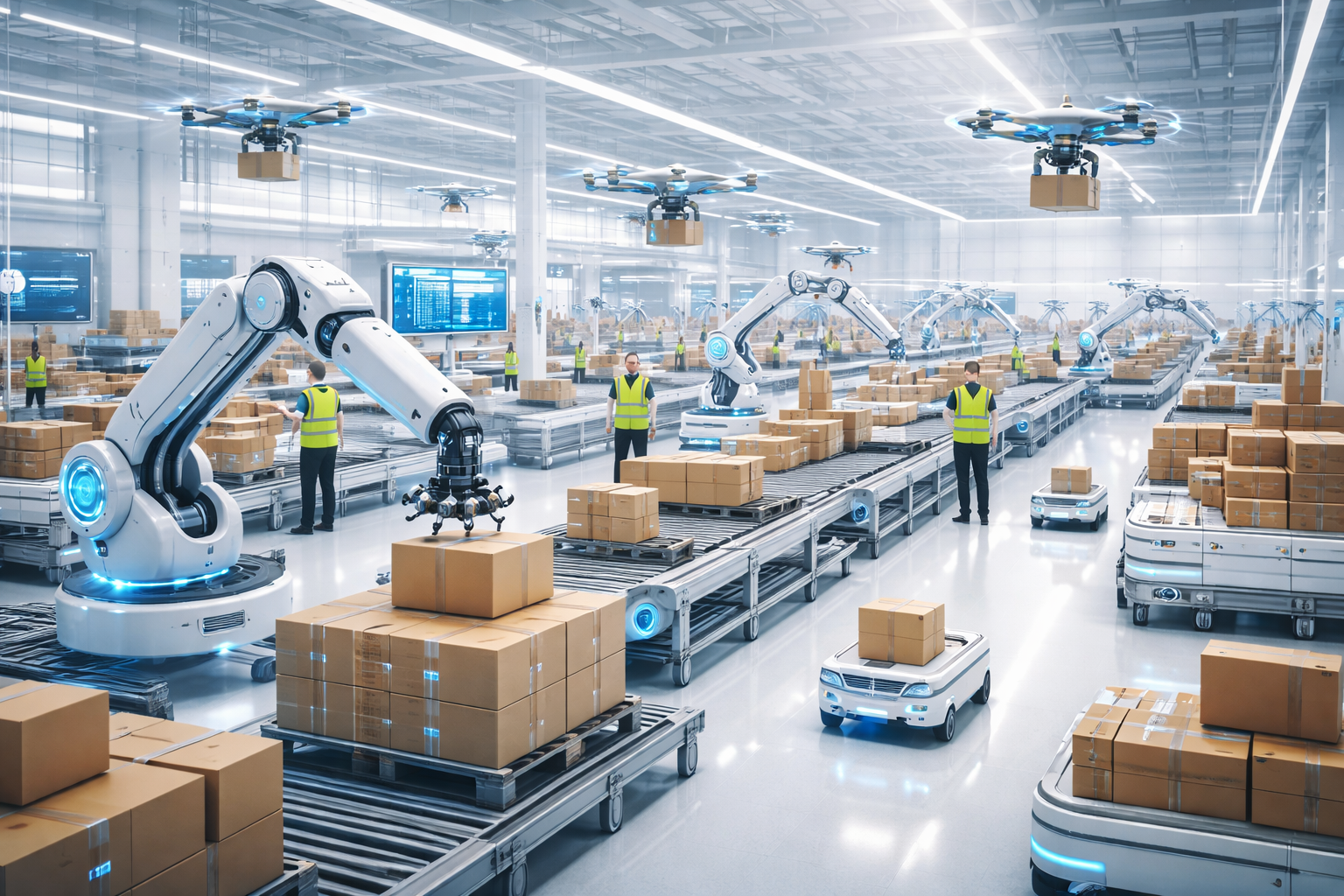
Warehouse Orchestration: The Next Great Supply Chain Breakthrough — Synchronizing Multi-Agent Robotics, WES, and Dynamic Workflows Across Modern Fulfillment Centers
In November 2026, the logistics automation landscape is undergoing a paradigm shift as distribution centers transition from isolated robotic systems to holistic Warehouse Orchestration Platforms and intelligent Warehouse Execution Systems (WES). While legacy Warehouse Management Systems (WMS) excel at static inventory record-keeping, billing, and macro-level order management, they lack the sub-second decision-making velocity required to govern modern fulfillment facilities populated by heterogeneous automation assets. Today's high-throughput facilities frequently deploy an array of specialized automated machinery—ranging from Autonomous Mobile Robots (AMRs) and Automated Storage and Retrieval Systems (AS/RS) to automated parcel sortation conveyors and human order pickers—that traditionally run on disconnected vendor software. Warehouse orchestration software resolves this fragmentation by serving as an intelligent, real-time "air traffic control" layer that dynamically harmonizes human labor and robotic execution.
Bridging the Architectural Chasm Between Rigid WMS and Heterogeneous Robotics
The definitive technological advance in current-generation warehouse orchestration platforms is their ability to synthesize real-time IoT machine telemetry, dynamic order priority states, and physical facility constraints into an adaptive, continuous execution workflow. Instead of releasing fixed, batch-oriented order waves that invariably produce congestion spikes at sorting or packing stations, the orchestration engine continuously assesses machine load, aisle traffic density, and workstation availability. Utilizing event-driven microservices architectures and standardized robotic interoperability standards (such as VDA 5050 and open RESTful APIs), the WES recalculates task dependencies and travel routes in real time. If an automated conveyor line experiences a temporary jam or an AMR fleet encounters transit bottlenecks, the platform instantly redirects picking tasks to alternative stations without manual supervisory intervention.
Real-Time Dynamic Task Allocation, Fleet Congestion Mitigation, and 3PL Throughput Gains
For third-party logistics providers (3PLs), omnichannel retailers, and freight forwarders managing contract logistics across major Indian distribution corridors in Bhiwandi, Chakan, Sriperumbudur, and Farrukhnagar, intelligent warehouse orchestration delivers unprecedented productivity dividends. Facilities operating with modern orchestration software report a 30% to 45% uplift in overall order throughput, up to a 60% reduction in deadhead travel times, and order cycle times compressed from multiple hours down to under 30 minutes. Most crucially, warehouse orchestration decouples hardware procurement from proprietary software locks, empowering supply chain operators to seamlessly deploy new robotic form-factors—such as pallet-handling AMRs, goods-to-person shuttles, or automated carton unloader arms—into existing facilities within days rather than months.